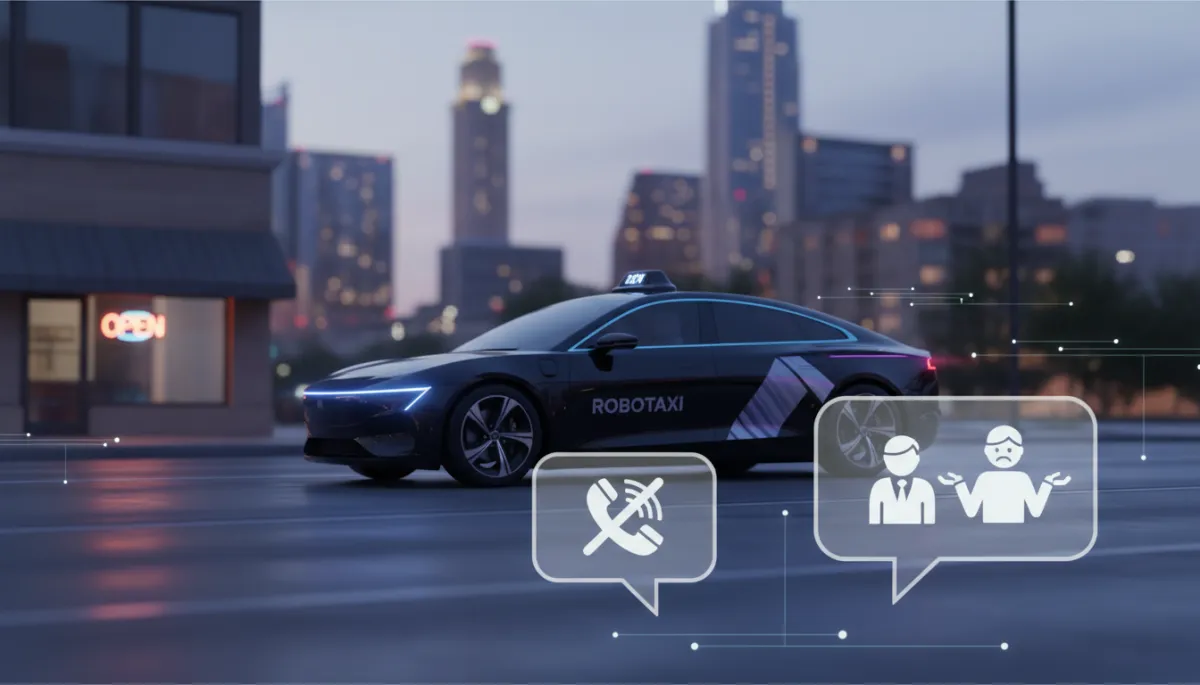
Austin Robotaxis: Tech Advances, Phone Woes
Austin Robotaxis, Business Phone Issues, Transportation Technology, Austin Tech News
Austin’s Got Robotaxis—So Why Is Nobody Answering the Phone?
As autonomous cars glide down Austin streets, many local customers still hit voicemail when they call nearby businesses. Here’s why that disconnect matters—and how Austin businesses can fix it.
The New Reality: Austin Robotaxis on Historic Streets
If you’ve been anywhere near Downtown, West or East Sixth, Rainey Street, East César Chávez, or Riverside lately, you’ve seen it: sleek autonomous vehicles quietly joining the traffic. Tesla, Waymo, and Zoox have turned Austin into a live test bed for Austin Robotaxis, with fully driverless rides already operating in parts of the city (TechCrunch; AP News). Tesla now runs a mixed fleet of supervised and unsupervised robotaxis, Waymo has partnered with Uber, and Zoox is piloting its purpose-built shuttles in key nightlife and entertainment areas.
In the span of just a couple of years, our transportation technology has leapt ahead. You can summon a ride with no driver, watch it navigate complex intersections, and get dropped off in front of a bar, boutique, or cafe—often on a carefully mapped robotaxi route that passes dozens of local businesses along the way. Stories about these services dominate Austin tech news, from safety debates to regulatory hearings and software recalls related to flooding and emergency response incidents (Axios; Dallas Express).
The Odd Contrast: High-Tech Rides, Low-Tech Customer Service
Yet for many riders, the futuristic experience ends the moment they step out of the robotaxi and try to call a local business. They tap a phone number from Google Maps or a social post, only to get:
Endless ringing with no answer
A full voicemail box
A generic message that doesn’t confirm hours or availability
While companies invest millions in autonomous fleets, business phone issues remain stubbornly old-fashioned: missed calls, dropped connections, and confusing menus. For small and mid-sized businesses along the robotaxi route—restaurants, salons, medical offices, retail shops, home services—this is more than an annoyance. It’s a direct hit to revenue and reputation at the exact moment customer expectations are being reshaped by cutting-edge technology around them.

Missed calls along busy robotaxi routes often mean missed reservations, bookings, and sales.
Why Robotaxis Raise the Stakes for Local Businesses
Autonomous vehicles don’t just move people; they reshape how and when those people interact with nearby businesses. As Tesla and Zoox expand coverage through entertainment and dining districts, riders increasingly make spontaneous decisions based on what they see out the window and what they find on their phones in real time.
Picture this: A group takes a robotaxi to Rainey Street. On the way, they scroll through options for late-night food or a quieter bar. They tap to call three places:
Business A answers on the second ring, confirms open tables, and texts a menu link.
Business B goes straight to voicemail with a generic message from 2022.
Business C rings and rings; no one picks up.
In an era of instant robotaxis and real-time maps, there is almost zero patience for customer service challenges like unanswered phones. The group is likely to choose Business A, even if B or C are closer or better suited. The result: robotaxis increase the volume of last-minute, high-intent customers—but only businesses with responsive communication capture that demand.
💡 Pro Tip: Treat every missed call from a robotaxi rider as a missed walk-in. They’re already nearby and ready to spend—if you pick up.
Common Business Phone Issues Holding Austin Shops Back
Many Austin businesses along popular robotaxi corridors face the same communication problems:
Outdated phone systems that can’t handle call volume or remote access, leading to poor call quality and dropped calls (Business News Daily).
No call routing or auto-attendant, so calls just ring on a single desk phone that may be unattended during rushes.
Inaccurate or missing voicemail greetings that don’t mention current hours, parking tips, or reservation policies.
No integration with modern tools like text messaging, online booking, or CRM systems, even as communication trends move in that direction (Forbes Tech Council).
These issues were already problematic before autonomous vehicles arrived. But in a city where people can hop into a driverless car within minutes, your response time and clarity now directly compete with the convenience of just going somewhere else along the route.
Aligning Your Phones with Transportation Technology
You don’t need to build your own robotaxi to keep up with transportation technology. But you do need a communication setup that matches the expectations it creates. Here are practical steps Austin businesses can take—especially those located near active robotaxi routes:
Audit your current phone experience. Call your own business during peak hours. How many rings until someone answers? What does the voicemail say? Would you choose your business based on that experience alone?
Upgrade to a modern business phone system. Cloud-based systems can route calls to mobile phones, support text messaging, and integrate with online booking tools (TechRadar). This is crucial when staff are moving between front-of-house and back-of-house or working remotely.
Use smart routing and simple menus. A short greeting—“Press 1 for reservations, 2 for directions, 3 for curbside pickup”—helps customers get what they need fast, especially when they’re already riding in a robotaxi and planning their next stop.
Enable text follow-ups. Many customers prefer to text rather than talk. Let callers opt in to receive a menu, booking link, or parking instructions via SMS while they’re still in transit.
Keep information synced with maps and apps. Ensure your hours, phone number, and website are accurate on Google Maps, Apple Maps, and major delivery or booking platforms. Robotaxi riders often rely on those listings first.
📌 Key Takeaway: You can’t control how Tesla or Waymo drive, but you can control how quickly and clearly your business responds when their passengers call.
Turning Customer Service Challenges into Competitive Advantage
As robotaxis expand, customer service challenges will only become more visible. Social media and review platforms are filled with stories not just about glitchy autonomous driving, but also about poor experiences at the destinations those vehicles reach. Being the business that “actually picks up the phone” is a simple but powerful differentiator in this landscape.
Imagine your listing appearing in a rider’s app while they’re on a Zoox shuttle headed down East César Chávez. If you can:
Answer quickly,
Confirm availability in under a minute, and
Text clear directions or a booking link,
you’ve just outperformed dozens of competitors who never even picked up. Over time, that reliability becomes part of your brand—and a quiet story that spreads through reviews, recommendations, and repeat visits from locals and visitors alike.
Austin Tech News Isn’t Just for the Big Players
When people think of Austin tech news, they picture Tesla’s latest crash report, Waymo’s ambulance-blocking incident, or Zoox’s driverless shuttles. But there’s another, quieter story: how local businesses respond to the expectations those technologies create. The city’s innovation narrative doesn’t belong only to global corporations. It also belongs to the restaurant that added text-based reservations, the clinic that reduced hold times, and the retailer that finally fixed its phone tree.
As autonomous vehicles continue to evolve—navigating floods, software recalls, and new regulations—your business has a chance to evolve too. You can modernize your communication, close the gap between high-tech streets and low-tech phones, and make sure that when a robotaxi stops nearby, your team is ready to turn that arrival into revenue.
Final Thoughts: Don’t Let the Cars Be Smarter Than Your Customer Service
Austin’s got robotaxis. They’re impressive, controversial, and still working through safety questions—but they’re here, and they’re reshaping how people move through the city. The question for local businesses is simple: when those passengers decide where to go next, will your business answer the call—literally?
Fixing business phone issues may not make headlines like a driverless car launch, but it can have an immediate, measurable impact on bookings, foot traffic, and customer satisfaction. In a city defined by innovation, don’t let your phones be the last thing to catch up. Start with a quick audit, explore modern phone and messaging solutions, and build a responsive, reliable communication experience that matches the pace of Austin’s streets.